Nearly three decades of pattern recognition.
Across nearly three decades of work with people, systems, and behavior — including more than two decades in clinical practice — one question has shaped my work: why do capable people get stuck?
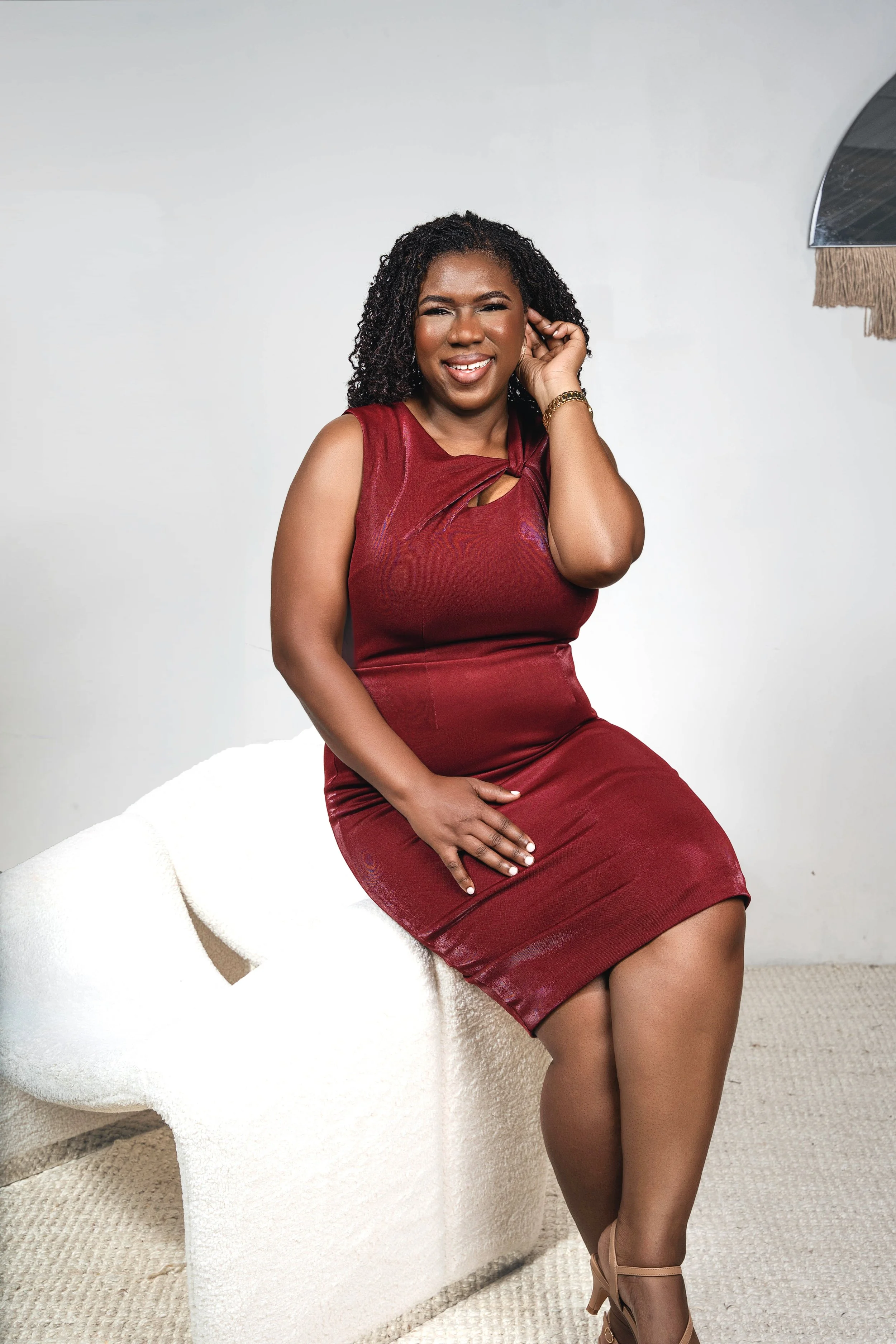
I'm Dr. Jumie Duduyemi — an Atlanta, Georgia based clinical psychotherapist, speaker, and consultant. I work with high-capacity professionals stuck in patterns that don't match their level of success, and I help them identify what's driving it — and begin moving differently.
I bring doctoral-level clinical training and years of leadership, media, and speaking experience to this work.
What I noticed
Thousands of clinical conversations have made one thing impossible to ignore: people don't stay stuck because they lack intelligence, motivation, or potential. They stay stuck because they're operating inside patterns they never consciously chose. My work is built around identifying those defaults — and moving people past them.
Over the years, I started seeing the same thing across very different lives.
People at the highest level of their professions — physicians, executives, attorneys, founders, leaders, parents. Their accomplishments were real. Their success was undeniable. Yet many of them kept running into the same thing: a cycle they could see but couldn't break.
It didn't care about credentials, income, titles, or achievement. What had helped someone succeed in one season had quietly become the very thing limiting them in the next.
And none of it was chosen. It was built over time — by rules they never agreed to and roles they never auditioned for.
No matter how different their stories looked, the patterns underneath were remarkably consistent.
The question that changed my work
Psychology has given us powerful ways to understand why people get stuck. That work matters.
But after years of clinical practice, I kept hearing a different question. "I understand why. Now what?"
That question stayed with me — not because psychology was missing the answer, but because the people I worked with wanted a clearer path from insight to change. What happens after the old default has been named? How do people move from understanding to something that holds?
That search became a structured approach I've refined across thousands of clinical hours — and continue to apply through therapy, consulting, speaking, and writing.
Because understanding yourself is valuable. But lasting change requires more than insight. It requires a clear way forward.
Before therapy, I was already learning to see patterns
Long before I became a therapist, I worked in case management, early child development, finance, and real estate. Different industries, different challenges — the same underlying skill.
Pattern recognition.
Looking back, I wasn't learning separate professions. I was learning to see how people, systems, and environments influence behavior — often in ways that aren't immediately obvious. Therapy gave me the clinical language, research, and tools to bring that ability into sharper focus.
I hold a Doctor of Psychology (PsyD) and am a Licensed Professional Counselor in the State of Georgia. My clinical training includes Cognitive Behavioral Therapy (CBT), Eye Movement Desensitization and Reprocessing (EMDR), Family Systems, and Solution-Focused Therapy. I'm a member of the Licensed Professional Counselors Association of Georgia.
Prior to founding Better Life Counseling, I spent a decade in senior clinical leadership within a large faith-based organization, where I built and led a counseling department, trained pastoral staff in counseling practice, developed community referral partnerships, and provided clinical care to organizational leadership.
Credentials
Speaking, media, and thought leadership
My work has extended beyond the therapy room for more than a decade — through speaking, training, writing, and media commentary.
I've been invited to speak to leadership audiences, women's groups, care teams, and professional gatherings on the psychology underneath relationships, emotional health, identity, leadership, and personal change. Topics have included professional burnout, emotional healing, relationship building, working with teens and young adults, supporting couples, and the pressure of perfection.
Featured panel: Imagine Women's Conference, alongside Lisa Bevere and Valorie Burton.
Published in: Bustle, Rewire, and Kareo.
On-air expert: TV One's For My Man (2024).
Occasionally I write about what keeps showing up — in the therapy room and well beyond it. Short reflections, a few times a year, when there's something worth saying.
If you want to receive these, leave your email below.
Notes from Dr. Jumie
There are three ways to engage: clinical therapy (Georgia), consulting (nationwide), and speaking engagements.